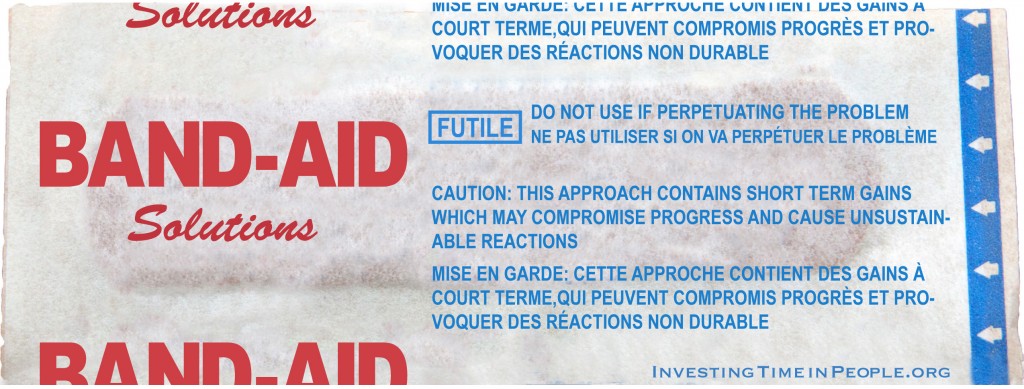
I called this blog ’Lessons I Learned’, but really it would be better titled ’Lessons I’m Learning’. I believe in sharing what we learn to help others avoid our same mistakes and also exposing ourselves to the criticism and questions which might help us improve. I am skeptical of the popular approaches to both voluntourism and development work, though those are both areas in which I have worked as I’d love to be part of learning how we can do them both better. I think we need to learn before we can help, so I believe “service learning” should be “learning service”. I feel like I am learning more every day about how to help create the world I want to see my future kids and their future kids living in, and sometimes what I learn contradicts what I thought I knew was true. I have learned that good intentions are not enough and that the only person you can “improve” in the world is yourself, so I had better start improving the world by starting there. I hope the dialogue generated through this site will give me more chances to do that and to share the lessons I am learning with others who could benefit from avoiding my mistakes.

28 July 2010 ~ 58 Comments

Searching for Ashley

This woman has carried a photo of a young American girl named Ashley, whom she met while in the Thai/Cambodia refugee camps, for the last 20 years.  She asks every American she meets if she knows Ashley.

The picture if faded from where she has held it up for every blond haired or light-skinned passerby. She keeps it in a plastic bag along with her ID card and photo of lost relatives, underneath the pile of jewelry she is selling.  She says when Ashley said goodbye, she promised to meet her in Cambodia some day. Since she was able to return to Cambodia, she has been trying to meet up with Ashley, but does not know how.

Siem Him is the first woman I have met who carries a photo of a lost foreign friend.  For those who survived the Khmer Rouge, letting go of a lost one means accepting they were killed.  Meeting a Cambodian who keeps a photo of lost relatives is not uncommon, but a foreigner who she met ten years after the official end of the regime?  This was a first….

I was visiting Battambang with a group of American teachers who met Siew Him as they were examining her jewelry offerings in the market.  ”No, we don’t know Ashley,” they said, wishing they could say they did. As we sat at breakfast overwhelmed by the fact that this woman has kept up a search for 20 years (and slightly giggling imagining an image of America as small enough for people to recognize each other by photo), we watched Siew Him thumb through her photos again, perhaps wondering if Ashley too was still looking for her.

My co-instructor, Claire, said we had to at least try to find Ashley.  So here we are.  Are you Ashley? Did you visit a Thai/Cambodia refugee camp in 1990? And does this photo look like you?

If so…. come to Battambang.  There is a lady who has been waiting a long time to find you.

25 July 2010 ~ 42 Comments

Process vs Product Driven Development Models

I loved this piece!  It is not only the part where Christopher London says “A building can’t teach.” when referencing donating school buildings that resonated with me, but his whole conclusion that product-driven development might sometimes be easier but less effective.

Sing it, Christopher!

(I wrote to his organization to get approval to re-post this here.  I’d love to read comments!)

Process-driven models of change work better

Every organization dedicated to social change believes it is providing a service in its community. Consequently, there are perhaps as many models of change as there are organizations. All these efforts can be placed loosely into two categories: “product-driven” models of change and “process-driven” models. We at Educate the Children, an Ithaca-based nonprofit that works to provide educational opportunities for women and children in Nepal, employ a process-driven model.

A product-driven model proposes a fairly constrained approach. Organizations may build schools or libraries, promote water or energy technologies, provide low-interest micro-loans or give out scholarships for school children. It is the dominant approach in international development. The strength of a product-driven model is that it is simple, direct and readily understood. It is also easy to quantify: X number of pumps installed, Y number of schools built.

Now, what can be wrong with building a school? Well, nothing. But, what is a school? Is it the building? Or is it the administrators, teachers, parents, students and the relations between them all that make it a functioning educational environment? An excellent teacher can make do with the shade of a tree and a stick to draw in the dust, though a classroom with desks and a blackboard certainly can make the job easier. But a building? A building can’t teach.

There are excellent things that can come from product-driven programs, like well-stocked libraries or low-cost computers. These products can be useful, but without a social structure to support them, they easily become white elephants. The problem with product-driven models is that they are mechanical models: add Product Z and social change follows. If only life were so easy.

By contrast, a process-driven model strives to build the necessary social relations that make products useful and sustainable features of local social life. Rather than build school buildings, we work with the community and local government to plan and execute the refurbishing of existing structures. This is far more cost-effective than starting from scratch, but it also initiates a process of the community working with what they already have, instead of relying on outside agencies. This means we can use resources to train teachers, provide teaching supplies, establish kindergarten classes and provide in-kind scholarships for students who otherwise could not afford to attend school.

However, there is more to succeeding in school than better classrooms or just being able to show up. One of the most important tools for success is breakfast. Children who arrive in class with contented bellies have the energy to exert their minds and bodies and the capacity to relax and concentrate. In order to ensure that kids eat, we must work with their families. This means initiating a process of consciousness-raising through literacy and communal organization in addition to intensive follow-through on subjects as diverse as proper use and maintenance of toilets, child and pre-natal nutrition and improving the productive capacity of farmland for food security and income.

While a product-driven approach starts with a pre-determined solution, the process-driven approach starts with people, works with them to identify needs and then devises solutions. Ultimately, product-driven approaches sell solutions while process-driven approaches help make them happen. So, whatever organizations you support, ask them, “what is your model of change?” You will get many different answers. Just remember: the best models start with people, not products.

Christopher London is the executive director of Educate the Children.

14 June 2010 ~ 7 Comments

TEDx Talk

Here is a (poor quality) video of the TEDxBKK talk I did a few months back. I am speaking about “giving things” away vs. investing time in people. I’d love to hear your thoughts.

01 June 2010 ~ 0 Comments

Thoughts on Voluntourism on CNN.com

A week or so ago someone from CNN contacted us to ask about our opinions on voluntourism, and today we’re on the front page of cnn.com! Exciting that we get to share our message about our transition from traditional “voluntourism” to an education-focused approach.

Full story here: http://edition.cnn.com/2010/TRAVEL/05/31/voluntourism.tips/index.html

31 May 2010 ~ 5 Comments

Why do you hate SCALE so much?

I don’t.

I want to clarify. My piece in Beyond Profit called “Much Ado About Scale” was intended to be anti-scale. If we can scale a quality solution: fabulous! It was intended to encourage other ways of looking at reaching more people with our ideas, rather than just trying to encourage organizations to “scale up” when their might be more successful options.  Here are my comments/thoughts to clarify:

—-

“Scalability” is a great quality of a project, don’t get me wrong! Of course we should aim to get more quality solutions out to more people. What I am talking about are the cases where quality and quantity are mutually exclusive in a way that makes “scaling” dilute the efficacy of a solution.

All too often I think we jump to the conclusion that the way to get ABC successful solution to more people is to get ABC organization to “scale up”. This blog post http://ow.ly/1Fg0e highlights some of the other solutions I think we need to consider more quickly when we find a quality project, such as getting that organization to train what others might view as “competitors”. We shouldn’t look to these options as exceptions to the “always try to scale-up” rule, but rather look at how to preserve quality while maximizing our scope and then pick the appropriate solution. Why are we not aiming more often for scaling a process rather than scaling a solution, when we know from years of NGO lessons learned that the thought processes are what can be spread from place to place, not the solution housed within an organizational framework which was designed for success in a smaller scale project formed from local knowledge?

I used the examples of Skoll and Unreasonable Institute, two organizations I respect, not to say they are picking the wrong people and ideas to invest in, but to say that I think they, and perhaps our whole sector, should alter the writing on our doors. Both organizations, one a well-respected industry leader and the other a new support mechanism for our field, have funded groups which are not profitable (ones which rely on grants to sustain themselves) and solutions which were not “scalable” to the degree they claim to be looking for. Why? Probably because they too, get that quality should be the trump card which clears scale and profit when all three aren’t in one hand. Yes, you are more likely to win the game if you have all three, but if your solution is only going to get dealt one, I’d bet on quality any day.

So, when our top supporters are making many “exceptions to the rules” my question is, why do we all keep trying to push scalability as a requirement for entry into the social entrepreneurship circles? People talking to me about our educational programs ask me all the time how we are going to “scale up our impact” as if focusing on quality in one area is not a high enough goal. For the educational program side of our work, as the founder, I would be disappointed if we were aiming to be in every province in Cambodia, in every school, or in every neighboring country. Why? Because I know that the solutions with which we have found success are the ones based most strongly in local knowledge, leadership, and collaboration, and that to scale to the levels others would define as success would not be possible in my lifetime given the quality I would like us to aim for. Rather, I want us to “scale” outside of our current shell by spreading our lessons to others rather than spreading our organization around the world: do trainings for other organizations, make all of our ideas and solutions open source, and give away our ideas for free to anyone out there who wants to repeat the processes we have used. That is counter to OUR ORGANIZATION reaching “scale and higher profits”, but in my opinion that is the only way to help more people have quality solutions in this specific field.

Here in Cambodia, I was just approached by a social investment fund looking to invest in one of our profit generating ideas. They wanted to fund our project but said they needed to sell this to their board and management team as something we were aiming to do in 10 cities all around South East Asia in order to get them on-board. They approached us, eager to invest… why? Because they, like so many other social investment funds, are struggling to find these “profitable and scalable” models. The local-based team wanted to push to invest in us, knowing full-well that we had no intention of being the biggest and most profitable solution, but they were going to need to adjust our story to get the board on-board. Isn’t that silly! Why do we keep profit-driven and scale as our gatekeepers, when so many of us are investing in “exceptions to the rules”?

We turned down the money from the investment fund, largely because I’d rather have us focus on quality in one place, until we get it right than be judged through the lens of scale as our finish-line. If and when we do create a successful model, if we can “scale up” and keep our quality, then we might look to do that. If we can’t, then I’m happy to kick scalable and profit-driven off of our cards and teach others how we reached the quality we were aiming for in the first place because for me, that’s the one gatekeeper I’m looking to please.

29 April 2010 ~ 11 Comments

Much Ado About Scale

A few months ago I was involved in a long discussion about hybrid organizations on Social Edge. From that conversation, I ended up writing a post called “Dear Social Entrepreneurship Thought Leaders” about my views on the metrics and definitions we are using for social enterprises.

Recently, I was lucky enough to be asked to synthesize these thoughts for the latest addition of Beyond Profit magazine where this piece is now featured: Much Ado about Scale.

If you have not been to Beyond Profit’s website before, please do!  They have  a blog featuring interesting social ventures and ideas from around the world and from their site you can subscribe to their social enterprise magazine. I am a big fan of what they are doing and am delighted for the chance to write for them!

The text from the article is below but click on the link to see it laid out: Much Ado about Scale

The social venture movement grew out of a rebellion against big business and international non-governmental organizations (NGOs). We shook our sticks at self-indulgent big businesses and turned up our noses at the waste and inefficiencies in the traditional non-profit world believing we had a better way to do things. We claim to be the outliers, looking to make an impact on the people and problems the traditional sectors have left in their wake, but have we really chosen a different path?

Like a middle child, stuck between businesses and NGOs, the social venture movement clamors for attention. We are quick to point out flaws but, like our sibling sectors, social entrepreneurship has drawbacks, too. Although we try to distance ourselves from our siblings, we continue to hold profit and scale as our markers of success. Groups supporting our sector, like The Skoll Foundation or the new Unreasonable Institute, choose projects that “expand to a new country within three years” or “reach over 1 million people.”  Have we forgotten the value in knowing the place of origin and its people? Often, that is precisely what makes a program successful. By limiting the conversation—as Skoll and Unreasonable and many others do—to for-profit, scaleable, sustainable enterprises, we are ignoring the good work of many entrepreneurs and organizations.

Some things can be scaled easily, the processes can be repeated, and the results in one place might be similar to another. Take, for example, Colgate. The company reaches millions of people with their products, encourages good dental hygiene, and makes a nice profit while doing so. Is this what we aspire to be?  No, most of us are not seeking a fortune at the bottom of the pyramid; we’re trying to create lasting change.

We need to speak differently about the realities of improving lives, whether it is through for-profit or non-profit means. But we limit the conversation when we only value one or the other.  Changing lives involves working closely with communities and the men, women and children within them. Lest we forget, people don’t change their habits overnight, nor can we move them out of poverty overnight. By demanding that all “social enterprises” in need of investment be card-carrying members of the “scale up” train, we are going to miss out on groups that have quality, lasting, bottom-up impact.

The fact is, scale can often dilute impact. Practitioners are often forced to choose between  improving the quality of a product/service, or offering a more affordable product or service. For example, take microcredit. It can be profitable by itself. But, a microfinance institution that sinks time and money into education, vetting, and training, resulting in an improved product, does so at the expense of profit and scale. Or, take the case of water. Which would you support? A water filtration company with the most sophisticated techniques, which ensures clean water?  Or a less effective product which is profitable and can scale?

We should take lessons from those large-scale international NGOs implementing projects which have lost touch with the people and communities they are claiming to support by “scaling up.” We can also learn from some of their solutions: partnering with small community-based projects which have the understanding and flexibility to tailor offerings to local needs. When working with people, it’s not always the solution which can be scaled but rather the process which led to success. Rather than providing incentives for initiatives to scale, perhaps we should start looking for successful localized initiatives and incentivize them to train “competitors” in other areas to spread their impact while keeping localized solutions.

We need to find ways to reward those who choose impact over income and success over scale, as they will be faced with those dichotomies with more frequency. As a sector, we should create new and previously unimagined possibilities. In order to do that, we need to support people who are not satisfied with providing just enough, but instead are focused on the quality of what they are doing.

Investing in groups that have a commitment to quality and impact is harder to track and measure than focusing on scale and profit margins. That requires a thorough understanding of the project and issues they are facing, but that is the point! We need to do the research to know if the impact and their commitment to quality is there, not just the easy task of looking at profits and size. Let’s take “Supporters of Scale and Profit” off our doors and get to the core of what we want to be: “For quality and impact.”

21 April 2010 ~ 0 Comments

Reasons to Photo-Fast

This is a guest post by Eric Lewis:

“Take lots of pictures!” It’s something we hear just about every time we leave for someplace exotic. Family and friends want to experience our adventures vicariously, and who can blame them? Photographs preserve certain moments—priceless scenes and scenarios that evade verbal description. But every action has an opportunity cost. What is the price of photographically cataloguing our travels?

Cost one: disconnect

We look for or are struck by opportunity: a picture that frames well and tells a story. The story can be anything. The story of glistening sushi, the story of a flat tire in the middle of the Bolaven Plateau, the story of haggling with a pregnant Cantonese fishmonger. Something that we must never forget, and that we want to share with others.

Next we try to capture the story. Ambient light, camera settings, timing, an eye for composition. The process of composing a picture pulls us out of the reality that we’re trying to capture. There is plenty to say in favor of this creative process, of course, but Facebook, loved ones, and our own vanity argue strongly enough in favor of photography. My aim is to discuss its drawbacks—and the act’s creative nature is drawback number one.

We cannot listen while talking, and likewise we cannot experience a moment while trying to communicate it to others.

I was once strolling through Prague at dusk with a friend. As we neared the Charles Bridge, a fireworks display went off, pitching swaths of orange and blue over the city’s gothic landmark. We had no idea this was coming. My friend, Katie, dropped to her knees and tore through her backpack, fumbling to locate and assemble her Pentax. I, having recently been gassed and robbed on an overnight train and therefore camera-less, just stood with my mouth open, looking into the sky. Then came a crescendo, then the finale. Katie shrieked in frustration. The show ended before she could snap a single shot. And I will never forget what the Charles Bridge looks like under the glare of fireworks on a clear winter night.

Had I not been freshly robbed, I probably would have flipped into snapshot mode. Sometimes life gives you free lessons.

Cost two: intrusion

Another story: During a tour of Cambodia’s Angkorian temples, my group visited Ta Prohm, famous for its appearance in the Angelina Jolie movie Tomb Raider. Naturally, the site is always thronged with tourists. Near the entrance a backpacker had asked a passerby to take his photo. Standing as far from the crowd as possible, the backpacker instructed his photographer: “Make sure there’s no tourists in the picture!”

A participant from my group advised, “You’d better get out of the shot then.” So true.

It’s easy, when taking photos, to see and think of our surroundings only as we want to. In framing the perfect shot, we often block out the bigger picture. This myopia is especially prevalent—and egregious—in the developing world, where well-meaning visitors transform into misery voyeurs, scanning for shots that pack at-home shock value.

Disregarding the context of our photography may be harmless at the entrance of a temple, but it can be downright intrusive when people are the subject matter. There’s a reason why rock bands and Marine platoons are notoriously distrustful of the press: they’re skeptical about how they will be portrayed. Approaching people with a camera is a good way to put them on guard, especially in developing parts of the world, where no scenario is off-limits in the minds of snap-happy tourists. The association between visitors with cameras and invasion of privacy is not lost on locals, who are showcased without consent on countless blogs and Flickr accounts.

Cutting cost

Try going camera-free. By removing this distractive crutch, you will truly engage your surroundings. Enhanced memory is just one benefit of being mentally present. Because memory is a multi-sensory capacity, tuning in to the scene around you will enhance your ability to recall it. Taking photos creates a cycle: we need pictures to jog our memory because we depend on them to do our remembering for us.

Even more rewarding are the interactions you’ll have, with locals and fellow travelers alike. People act more naturally off-record, so ditch the camera for unfettered authenticity. Photo-fasting is especially useful in cultural exchange situations, such as home stays. The aim is to connect with people who are ostensibly quite different from us, and we can facilitate interaction by removing the mental and physical barrier that photography imposes.

Making it work

While it may be unrealistic to stop taking photos completely, you can reap the benefits of intermittent photo-fasting. I recommend a ‘one day with, one day without’ routine. (If you’re the journaling type, note the differences between these days.) Another option is to nominate one person in your group to photograph each day—the Internet makes photo sharing easier than ever.

As photographer Adam Vaught puts it, “Anyone can shove a camera in someone’s face and bring home unique photographs, but at what cost? I’ve discovered that honest interaction, exchange and interest in your subject leads to more interesting photography.” Photo-fasting will help you find this balance between observation and interaction, which will improve both your photography and your ability to connect with those around you.


Eric Lewis recently returned to his home state of Virginia after spending the better part of a year in Cambodia with PEPY. He believes personal happiness is positively correlated with one’s use of passport and library card.